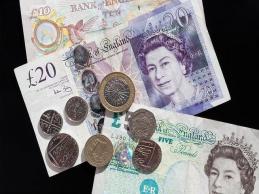
Investing in Gold

APMEX Reviews
Gold is like portfolio insurance

Investors who want to put their money into precious metals turn to cold more than any other metal. Gold is considered and excellent hedge against inflation and the vagaries of economic or political turmoil. Like other markets gold is subject to speculation, and it is common to purchase futures contracts and derivatives based on gold.

In September 2010 Joe Foster, a portfolio manager at the Van Eck International Gold Fund, explained why gold can be an excellent hedge against inflation:

“The currencies of all the major countries, including ours, are under severe pressure because of massive government deficits. The more money that is pumped into these economies – the printing of money basically – then the less valuable the currencies become.”

At a time when money made on bonds, equities and real estate does not properly compensate for risk and inflation, then investors turn to gold and other alternative types of investments in greater numbers. Some portfolio managers think of gold as a kind of “portfolio insurance.”

New York’s New Medicaid Care System

New York is now working to alter the care system for nearly 1 million people on Medicaid through the federal health care reform called Health Homes.

According to the reform, patient care focuses on the case itself, and organized through a network which will include hospitals, mental health organizations, health plans, community-based institutions, addiction disorder providers and heatlh centers. A care manager will be elected to manage these numerous services.

According to Gov. Andrew Cuomo, it was no small feat for his staff to organize such a program in such little time. Agencies throughout the state have pooled resources to provide information and eduction to the public, as well as to health home applicants.

Asia’s Economic Growth: Spotlight on India

According to a recent poll from Reuters, it appears that economic growth in India has witnessed an escalation in the first quarter of 2013. This is particularly good news for the Asian region given that it has encountered quite a substantial low in the last quarter of 2012.  This report indicates that India could be on the upswing, moving away from its downward spiral.

However, there is still much work to be done vis-à-vis strengthening India’s economy.  Indeed, according to economist Kruti Shah, this recent statistic is “only a marginal improvement with much of the support from a slight recovery in the manufacturing sector and better trade data in this quarter compared to the previous quarter.”   However, given that there has been somewhat of a recovery in the country’s exports, factories and investments, this had a positive, noteworthy impact on the performance of the overall economy. There was a slight increase in capital goods output as well as exports which saw an escalation from levels during the same time period as 2012.

Economists and financial predictors must still be aware of India’s current account deficit that witnessed an all-time high in the last quarter of 2012 and still today remains under substantial pressure. But simultaneously, inflation dropped below 5 percent in April 2013, which puts it in the Central Bank’s comfort zone for the first time in over three years.

traducción español

Brighter Outlook for San Diego Economy

San Diego’s economy seems to be on the rise thanks to a growing construction agency and a steadily improving job market.

Alan Gin, an economist from the University of San Diego, collected the information for the San Diego region’s index of leading economic indicators, which rose almost a full point last month. He explained that the change resulted from a boost in multi-family building permits and less first-time unemployment claims. The economic recovery is expected to continue throughout the area.

“I think we’ll have a good job growth,” Gin said. “I think the housing market will continue to be strong. And as a result, I think the unemployment rate is going to drop locally. It’s already down to about 8 percent.”

The only indicator that fell over the past month, according to Gin, was consumer confidence. He postulates that the decrease is a result of rising gas prices, new payroll taxes and political gridlock.

traducción español

PayPal Co-Founder Launches New Business

Co-founder of PayPal Max Levchin is on to the next big thing. He has just launched a new business called Affirm that will compete in the mobile payments business. Affirm’s goal is to help shoppers to complete online purchases more quickly and easily with smart phones and other mobile devices.  Affirm wants to streamline the mobile checkout process online. They say that they have actually managed to bring the online buying process down to two taps on the smartphone screen.

For first time users there is a third step since users need to log into their Facebook accounts and accept the Affirm application. After that, Affirm explains that users will only need to tap the Affirm button on the participating merchant website and then confirm the order.

Affirm has explained that users have 30 days to pay for their purchases and they make their money by charging participating merchants a small fee.

Levchin certainly has quite a resume behind him. Having founded PayPal with Peter Thiel, he was the Chief Technology Officer there for four years before PayPal was acquired by eBay. He also designed and built PayPal’s online security and fraud-prevention systems which have both been leaders in the field.

traducción español

Finance Ministers Meet in Brussels to Discuss Economic Pitfalls

As the European crisis continues, financial leaders are seeking ways to gain crisis-management momentum in an effort to avoid future political pitfalls.

Ministers from across the region are now meeting in Brussels  to debate the options of aiding Cyprus and Greece during this chaotic time.

Chancellor Angela Merkel’s council chairman Wolfgang Franz said: “We don’t know yet how we’re going to get out of the crisis. If the crisis is a marathon, we’ve got two-thirds of the course behind us. But the last third is always the hardest.”

Italian 10-year bonds increased to a year-to-date high of more than 4.5%, while the euro fell 2% against the U.S. dollar. The currency change came after European Central Bank President Mario Draghi expressed his concerns regarding the euro’s strength and its effect on recovery.

“The exchange rate is not a policy target, but it is important for growth and price stability,” Draghi said. “We want to see if the appreciation is sustained, and if it alters our assessment of the risks to price stability.”

Businesses and Sales Predictions for 2013

This video highlights the optimism that many businesses have for the financial year ahead. In a new survey from the National Association for Business Economics, they found that respondents expect to hire more people in the next quarter than they did in the April 2012 survey. More firms also said that they expect wages to rise. Learn more about the survey and about what the National Retail Federation has found about sale predictions for the year ahead.

China’s Economy Shows Signs of Recovery

China’s economy has finally reached a turnaround after a prolonged rough patch. Exports and domestic demand are both showing signs of recovery, and the country is buzzing as a result.

This weekend, data including figures for industrial production, fixed-asset investment, retail sales and overall economic output will be released, revealing the expansion of what is already the second-largest economy in the world.

Retail sales have also increased significantly. Liu Licai, a merchant in southern China, explained that her shelves have been emptying so quickly that she is forced to place additional orders with suppliers.

“Business has gone up by more than 10 percent in the last several month,” she said.

Situations like that of Ms. Liu have been keeping factories busy. As a result, employment rates are increasing, while construction sites show new signs of life and markets grow across the country.

Fiscal Cliff Negotiations Stalled at the Moment

As January 1st 2013 approaches, with its automatic tax-hikes and draconian budget cuts looming ever more real, negotiations to find an equitable solution are getting more heated and volatile. With the delay in progress has come the threat from the Republican leadership to take measures into their own hands and bring its own bill to the floor of the House of Representatives.

Yet even among Republicans this bill, known as “Plan B,” evokes internal disharmony as hardline Republicans do not agree with the tax hikes for the group of earners making $1 million or more which is included in the Republican proposal, a necessary compromise to avoid a veto from President Obama.

Obama did not understand what was delaying the talks which will hopefully reach a reasonable compromise between Obama’s position and the Republican viewpoint on how to avoid the coming “fiscal cliff.” The President told Boehner, the Republican Speaker of the House and the chief negotiator for the Republican side, that he should stop worrying about scoring “a point against the president” or having him make concessions, “just for the heck of it.”

“It is very hard for them to say yes to me,” Obama said at a news conference in the White House. “At some point, you know, they’ve got to take me out of it.”